Free business idea anyone?

Several years back I was a guest speaker/lecturer at the University of Belgrade Faculty of Economics, and at the end of my lecture at a so called “Q&A” session, I asked students of the faculty, what sort of business ideas they would pitch to a possible investor (if this investor were me)? I was always fond of the idea of creating a sort of “business angel”/venture capital kind of organization in Belgrade, Serbia. Financial/business institutions in my home country are not providing entrepreneurial support for young aspiring businesspeople… so this was my motivation for the question. There were 4 ideas suggested from the students: 1) opening a bar (which is understandable given the fact that some students I am sure spend a ton of hours in bars during their studies) 2) opening a bakery (a popular fast-food destination in Belgrade) 3) opening retail store (my lecture was about the retail market, so it somehow subconsciously emerged) 4) joining a political party (this one was fun, but it didn’t fit within my “return on invested time concept”). I was negatively surprised that in the era of internet, digital solutions, social networks, apps, I got these fairly simple ideas from graduate students of a solid Faculty (I blamed the professors for this in the aftermath of the lecture, as from my point of view it was not the capacity, but a capability/faculty setting problem).
Anyway, during my career I have had a number of business ideas. Some of which I executed, and some of which I didn’t for a number of reasons. The main one was that I thought (selfishly) that I would be able to execute at one point in time, but some ideas although a lot of work has already been done in preparation would not withstand the length of the queue for implementation. That is why in this article I am going to share one business idea I have been developing for some time, and the part of the consumer study my company financed in the course of preparation for the launch.
Let’s start from one specific behavior trend… For years now working from a remote location/location free/working from home is expanding. There are several reasons for this (not to mention the covid19 effect, which accelerated the trend to maximum), and some of them are employee related – with employees desiring more flexibility in terms of their way of a working model (new freelance opportunities as well as being a new model as a whole). Others are employer related where employers think that office space in some industries is just obsolete, or just a cost that needs downsizing. With new technological solutions kicking in, it’s clear that we will be seeing more usage of these technological solutions, which will lead to less usage of offices. On the other hand, not all people are fit for working on their own – for a number of factors, and I am going to name just a few: space to work availability, self-driven mentality, social factors, etc… So to conclude – a number of people are making a decision of their own where to work and how to organize themselves.
This ultimately lead to opening up of a new industry – so called “Office Hub industry” or “Coworking Space industry”, serving the needs of these Digital Nomads, the way the people using these facilities often describe themselves. Of course, facilities are not used only for the individuals, but also for small sized companies, startup’s, conventions, etc. There are large office hub’s around the world already, even appearing as some regional/worldwide chains. There are also some companies which address the companies in need for small working spaces – I am including the one which I think is doing a very good job (https://www.office-hub.com/uk)
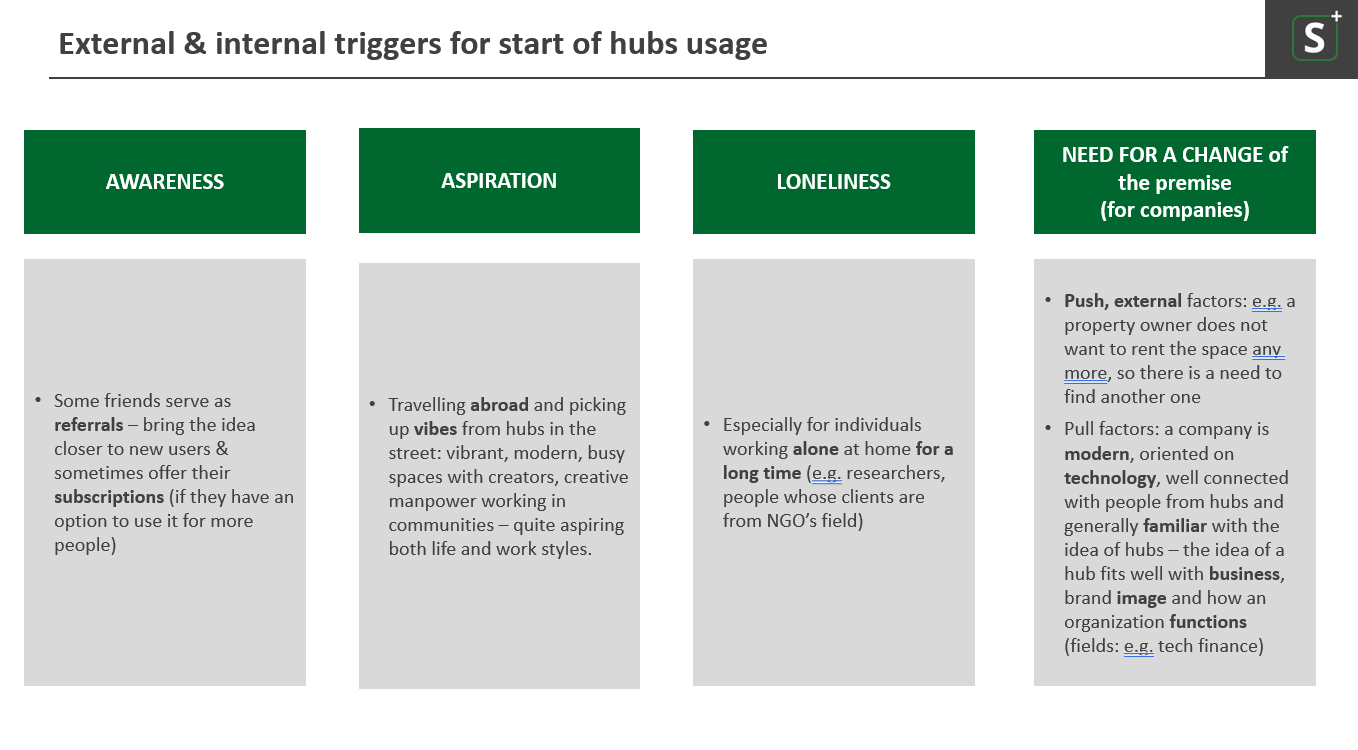
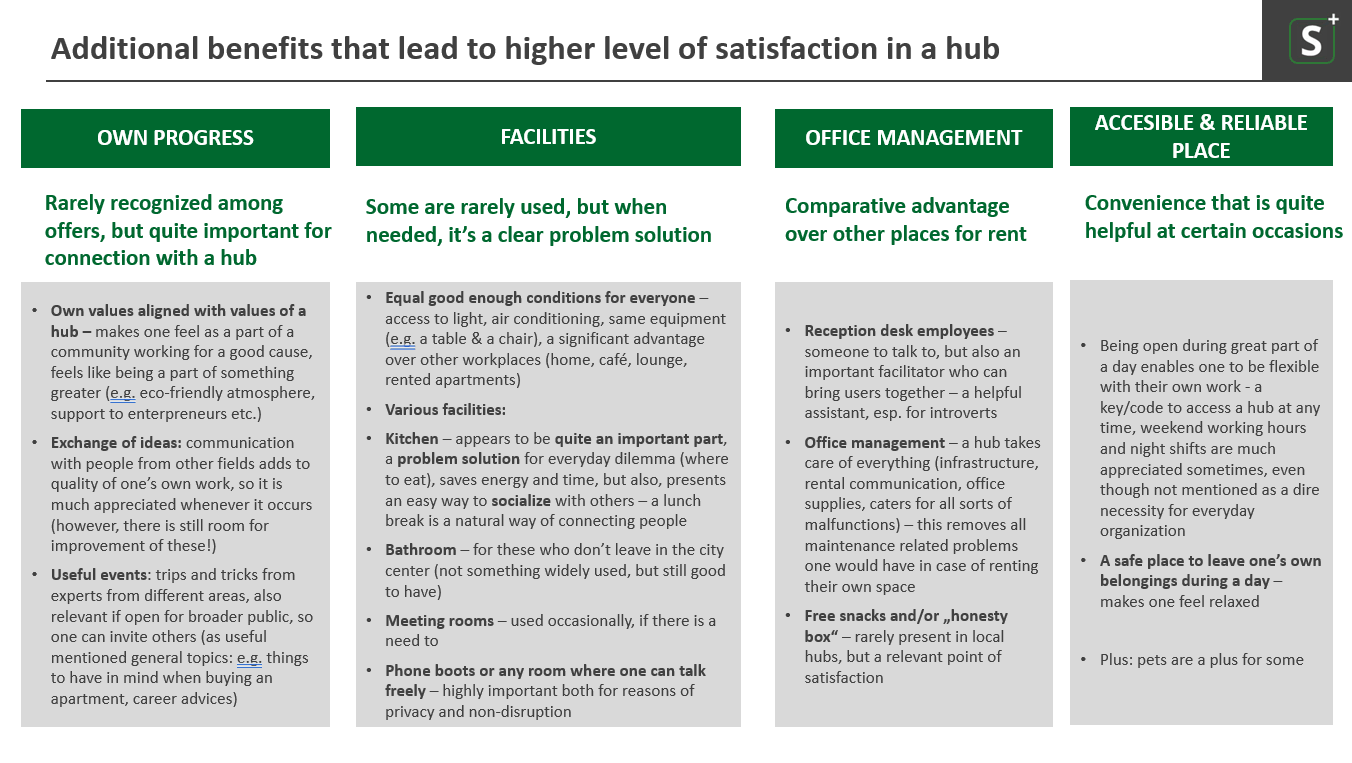
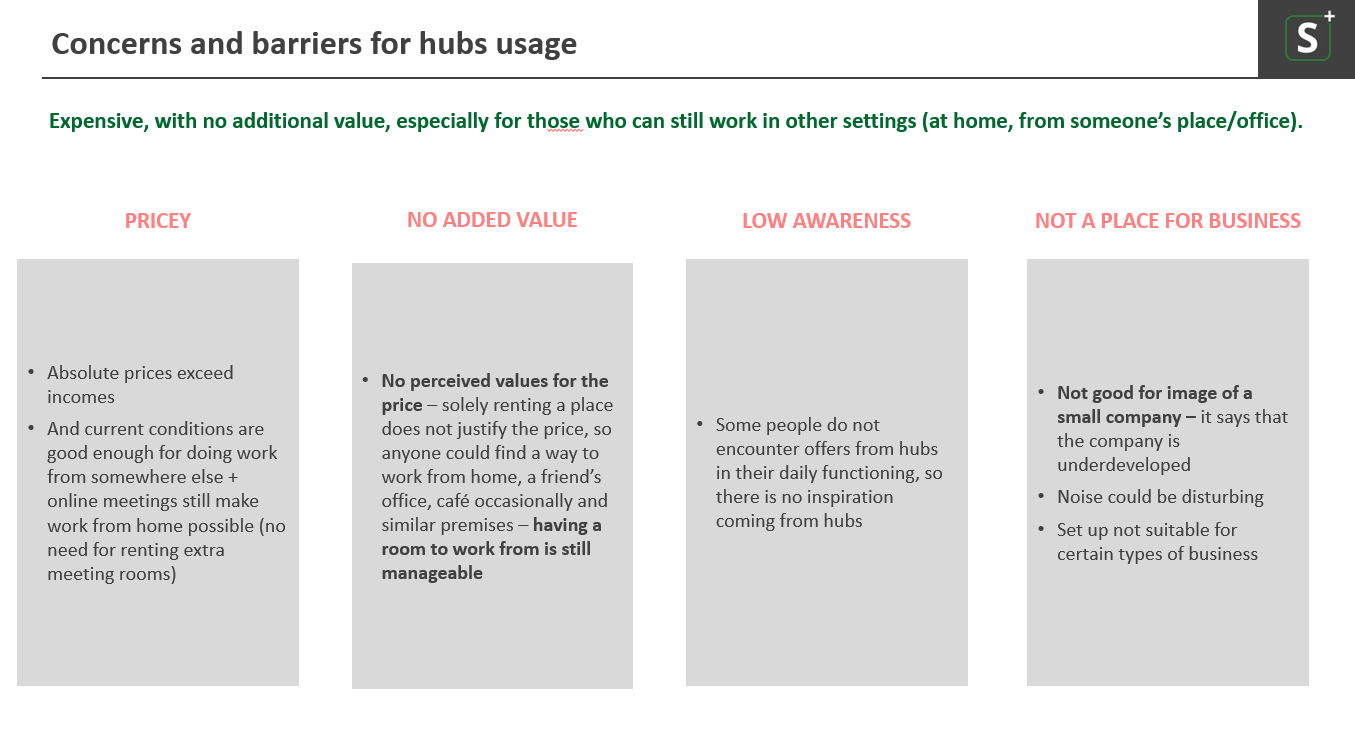
Now, in CONSULT1, we do not focus on small businesses only but rather on (a) individuals who already use the service of co-working space/office hub, and even more on (b) individuals who don’t use these facilities, but currently dominantly work from homes and sometimes use different places for work, with all the benefits and downsides of these habits. Of course, we do not forget the (c) small (and big) companies. And as always, when we start building up a new business, we create a consumer persona (see a previous article on this topic Brand building: part 1 – story of Consumer Persona), with the help of our external partners.
Hub users
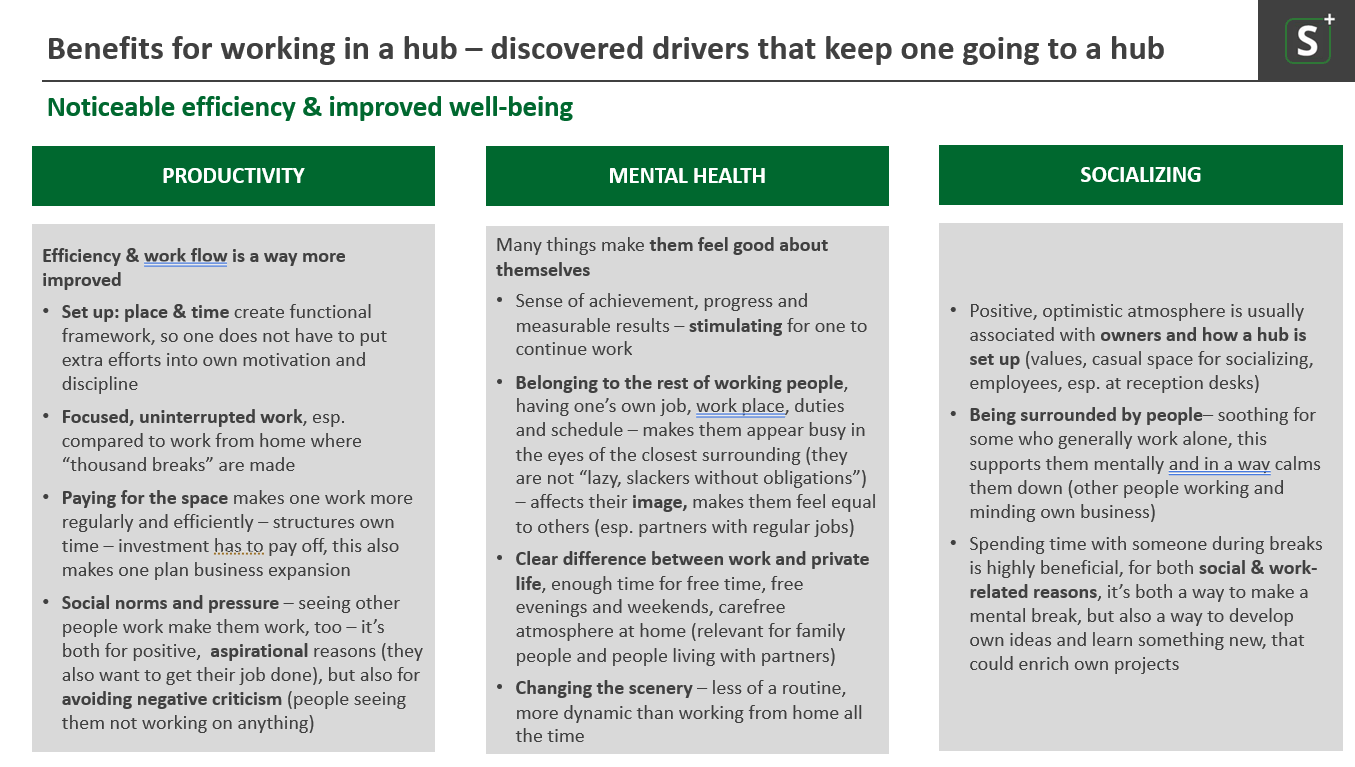
Non-hub users
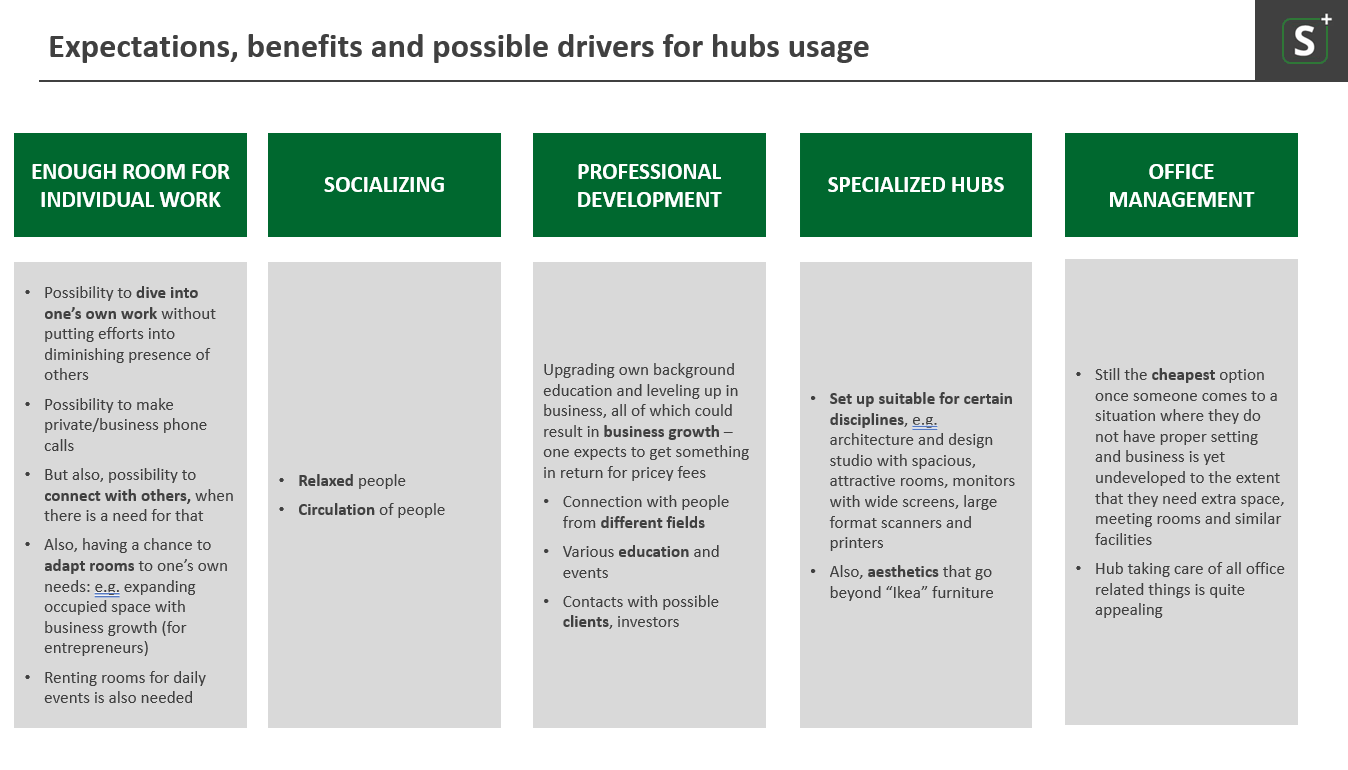
So, when we finalized the work of understanding – who are our potential users of the co-working spaces/office hubs, then we started to work on understanding as to how to attract (a) companies and people owning office space for rent (b) companies and people owning vacant space which can be easily turned into office space.
Our final solution was our version of “AirBnB for digital nomads (+current nonusers of the available market offer)” with a different angle approach to office space lenders vs AirBnB’s.
If you are interested in seeing through this idea, contact us for more information.